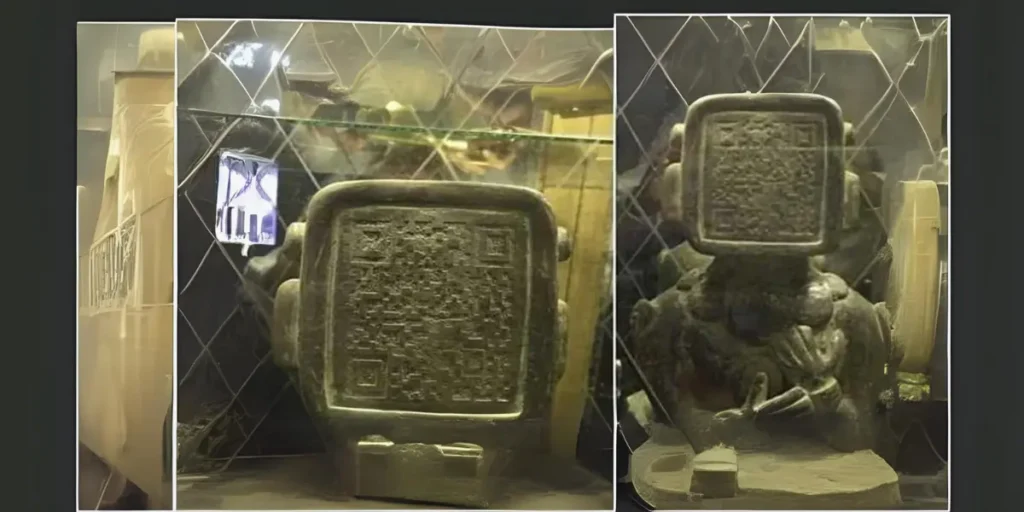
Ancient Royal Symbols as Early QR Codes – When we think about QR codes, we imagine modern black-and-white squares that connect us instantly to digital information. But what if the concept behind QR codes is not as modern as we think? Long before smartphones and the internet, ancient civilizations were already using symbolic systems to store, transmit, and authenticate information. In many ways, ancient royal symbols functioned like early QR codes, compact visual markers packed with meaning, authority, and data.
This fascinating connection between ancient royal insignia and modern digital codes opens up a fresh perspective on how humans have always relied on visual communication. By understanding ancient royal symbols as early QR codes, we can see how history laid the foundation for today’s fast-scanning world.
The Power of Symbols in Ancient Kingdoms
Across Egypt, Mesopotamia, China, Rome, and medieval Europe, rulers used specific symbols to represent their authority. These were not random decorative marks. They were carefully designed emblems embedded with identity, legitimacy, lineage, and even political messages.
A royal seal, for example, acted as a signature. When stamped on clay tablets, wax seals, coins, or official decrees, it instantly verified authenticity. Just like scanning a QR code today confirms a website or payment link, seeing a royal seal confirmed that a message truly came from the king or emperor.
The symbol itself contained layers of meaning. Crowns, animals, mythological creatures, specific patterns, and sacred geometry were all deliberate choices. Each element communicated something to those who understood the code. In societies with low literacy rates, these visual markers were powerful communication tools.
In this sense, ancient royal symbols operated as early data storage systems. Instead of storing digital links, they stored authority, identity, and political legitimacy in a compact visual format.
Royal Seals as Authentication Tools
The Ancient Version of Verification Technology
In the ancient Near East, cylinder seals were rolled onto wet clay to leave intricate impressions. These seals were unique to their owners. Much like modern encrypted QR codes, they were difficult to duplicate. The detailed carvings ensured that each impression acted as proof of origin.
Similarly, in medieval Europe, wax seals attached to letters or decrees prevented tampering. If the seal was broken, it meant the document had been opened. This function is surprisingly similar to secure QR codes used in payments and digital tickets today. Both systems provide authentication and protection against fraud.
Royal seals also carried images of gods, heraldic animals, or family crests. These were more than decorative motifs. They reinforced the divine right of kings, military strength, or dynastic continuity. Anyone familiar with the symbolism could “read” the information embedded in the design.
Coins as Portable Information Carriers
Another strong example of ancient royal symbols functioning like early QR codes can be found in coins. When a ruler minted coins with their portrait, name, and symbolic imagery, they were distributing state-approved information across their entire territory.
Coins were essentially portable media. They traveled through markets, cities, and foreign lands. A single glance at a coin revealed who was in power. It communicated economic stability, political control, and cultural identity.
Roman emperors frequently updated coin designs to reflect victories, new titles, or political shifts. This is not so different from updating a digital QR link to direct users to new content. The coin became a small, round broadcast system, compact, efficient, and highly recognizable.
For many ordinary people, coins were their primary exposure to the ruler’s image. Just as scanning a QR code gives instant access to a brand’s message, viewing a coin provided instant recognition of authority.
Heraldry: Visual Codes of Identity
Coats of Arms as Encoded Profiles
During the medieval period, heraldry developed into a complex system of visual identification. Knights and noble families displayed coats of arms on shields, banners, and armor. Each color, animal, and symbol followed strict rules and carried specific meanings.
A lion might symbolize courage. An eagle could represent power or imperial connection. Colors like gold, red, and blue had symbolic significance tied to virtues or status. These combinations created a visual identity system.
In battle, where faces were hidden behind helmets, these symbols allowed instant identification. They were scannable at a distance. In that sense, coats of arms worked similarly to QR codes or brand logos today. They provided immediate recognition without requiring text.
Over time, heraldry became so structured that it functioned like a formal language. Experts could decode family lineage, alliances, and rank simply by examining a shield. It was a sophisticated visual database embedded in art.
Sacred Geometry and Hidden Meaning
Ancient royal symbols often incorporated sacred geometry and cosmological references. Egyptian pharaohs used specific iconography such as the ankh, the crook and flail, or the sun disk to connect themselves to divine authority. Chinese emperors used dragon motifs to symbolize heavenly power.
These symbols acted like encrypted information. To outsiders, they were decorative. To insiders, they conveyed profound political and spiritual messages.
Just like modern QR codes require a scanner to interpret them, ancient symbols required cultural knowledge. Without understanding the context, the deeper meaning remained hidden. But for those within the system, the message was clear and powerful.
Control, Trust, and Centralized Authority
One important parallel between ancient royal symbols and QR codes lies in trust systems. A QR code works because users trust the system behind it. They trust the platform, the brand, or the institution that generated it.
Ancient societies operated in a similar way. The authority behind the symbol mattered. A royal emblem was effective because people trusted, or were required to recognize, the power it represented.
Forgery was severely punished. Counterfeiting coins or seals was considered treason in many kingdoms. This mirrors modern cybersecurity concerns. Just as fake QR codes can lead to fraud, fake royal symbols threatened political stability.
The need for verification, trust, and secure transmission of information has always existed. Technology has changed, but the underlying human requirement remains the same.
From Stone Carvings to Digital Squares
The evolution from carved stone insignia to digital QR codes reflects technological advancement, not conceptual change. Humans have always sought efficient ways to compress and transmit information visually.
Ancient royal symbols were compact, standardized, and instantly recognizable. They authenticated documents, reinforced identity, and communicated authority across vast territories. In many respects, they served the same core function as QR codes do today.
The difference lies in speed and scale. Modern QR codes operate in milliseconds and connect to global networks. Ancient symbols worked within slower communication systems but were equally innovative for their time.
Why This Perspective Matters Today
Understanding ancient royal symbols as early QR codes helps us appreciate the continuity of human communication. It shows that our digital habits are rooted in ancient practices. The desire to encode identity, secure information, and transmit authority visually is not new.
For historians, this comparison provides a fresh analytical lens. For digital marketers and branding experts, it highlights the timeless power of symbols. A strong visual identity has always mattered. From royal crests to corporate logos, the principle remains unchanged.
In the world of SEO and digital presence, the lesson is clear. Visual authority builds trust. Recognition drives engagement. Symbols carry meaning far beyond their surface appearance.
Conclusion
Ancient royal symbols were far more than decorative art. They were sophisticated communication tools that stored and transmitted authority, identity, and legitimacy. In many ways, they functioned as early QR codes, compact visual systems packed with layered information.
From royal seals and coins to heraldic crests and sacred emblems, these symbols formed the backbone of political and cultural communication in ancient societies. While technology has evolved from carved stone to digital pixels, the fundamental concept remains remarkably similar.
By viewing ancient royal symbols through the lens of modern QR codes, we gain a deeper appreciation for the continuity of human innovation. The tools may change, but the need to encode, authenticate, and communicate through powerful symbols continues to shape our world.