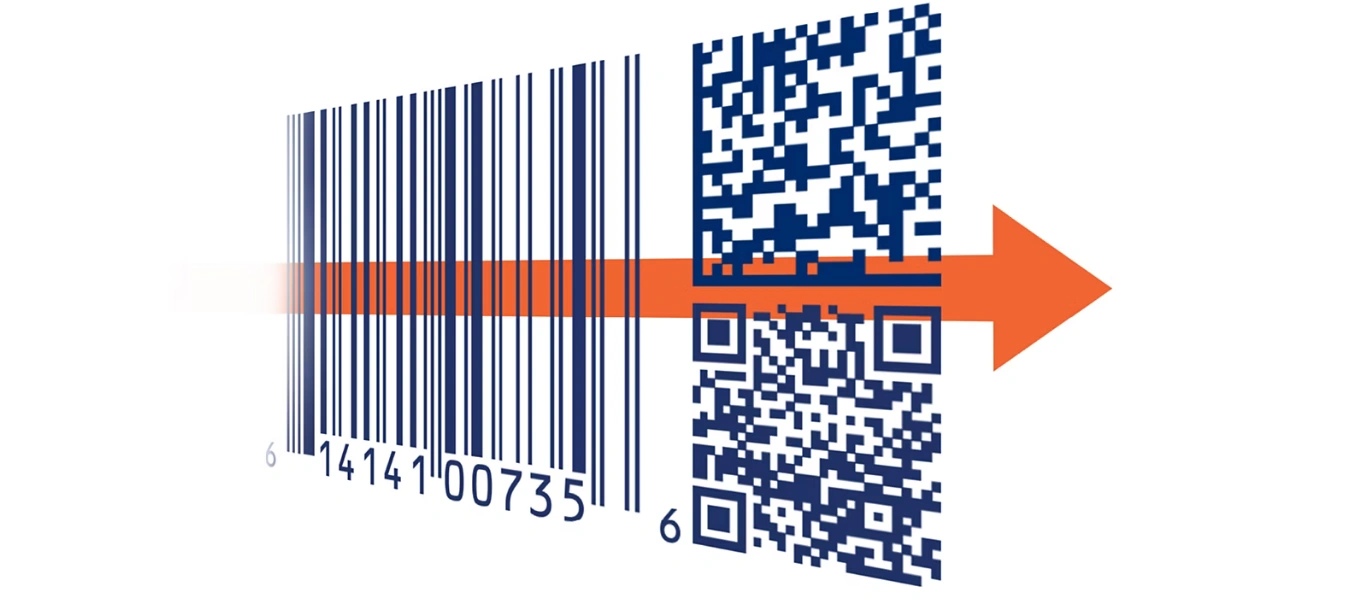
What Will Replace QR Codes in the Future?
What Will Replace QR Codes in the Future | QR codes have become a familiar part of everyday life. People use them to make payments, open websites, access menus, share contact information, download apps, and interact with advertisements.
They are convenient because almost any modern smartphone can scan them instantly.
But technology rarely stays the same forever. As smartphones, artificial intelligence, wearable devices, and computer vision continue to develop, new technologies could eventually reduce our dependence on traditional QR codes.
So, what will replace QR codes in the future?
The answer may not be a single technology. Instead, several emerging technologies could make information sharing faster and more natural.
1. NFC Could Become More Popular
Near-field communication , commonly known as NFC, is already used for contactless payments.
Unlike a QR code, NFC doesn’t require users to open their camera and point it at an image.
Instead, a compatible device can simply be brought close to an NFC tag or terminal.
This makes NFC particularly convenient for:
- Contactless payments
- Digital business cards
- Transportation systems
- Hotel room access
- Product information
- Event tickets
As more phones and wearable devices support NFC, it could replace QR codes in situations where physical proximity is more convenient than scanning.
2. Digital Business Cards May Reduce QR Code Sharing
Traditional business cards have increasingly moved into the digital world.
Instead of handing someone a card containing a QR code, future devices may allow users to exchange contact information automatically.
A smartphone, smartwatch, or other wearable could potentially detect another nearby device and securely exchange selected information.
This would eliminate the need to manually scan anything.
Users could decide exactly what information to share, such as a name, phone number, email address, or professional profile.
3. AI-Powered Computer Vision Could Make Scanning Invisible
Artificial intelligence and computer vision may eventually make QR-style interactions almost invisible.
Instead of deliberately scanning a code, a camera could recognize an object, location, product, or sign and automatically provide relevant information.
Imagine walking into a store and pointing your phone toward a product.
Rather than finding a QR code on the packaging, the camera could recognize the product itself and display:
- Product information
- Price
- Reviews
- Instructions
- Available colors
- Purchase options
In this scenario, the physical QR code becomes unnecessary.
4. Augmented Reality Could Change How We Access Information
Augmented reality could offer another alternative.
Instead of scanning a code, users could look at an object through smart glasses or a smartphone camera and see digital information directly overlaid on their surroundings.
For example, looking at a museum exhibit could automatically display its history.
Looking at a restaurant could show its menu.
Looking at a product could reveal its specifications.
The interaction becomes more natural because users interact with the physical world rather than searching for a small square code.
5. Voice Commands Could Replace Some QR Code Uses
Voice assistants are another potential alternative.
For simple actions, users may eventually prefer saying what they want rather than scanning something.
For example:
“Show me the menu.”
or
“Open the payment page.”
Artificial intelligence can understand natural language and determine what action the user wants.
This could be particularly useful for accessibility because voice-based interaction doesn’t require users to position a camera accurately.
6. Wearable Devices Could Make Physical Scanning Less Important
Smartwatches, smart glasses, and other wearable devices are becoming increasingly capable.
A future smartwatch could potentially detect nearby payment terminals, tickets, doors, or products and interact with them automatically.
Smart glasses could go even further by recognizing objects in real time.
Instead of pulling out a smartphone and scanning a code, users might simply approach an object and receive relevant information through their wearable device.
7. Bluetooth and Proximity Technology May Become More Useful
Bluetooth-based proximity technologies can identify nearby devices or locations without requiring a visual code.
For example, a store could detect when a customer enters a particular area and provide relevant information through an app.
Similarly, museums, airports, hotels, and stadiums could use proximity technology to provide location-specific information.
The advantage is that users don’t necessarily have to search for a code.
The system can respond based on where they are.
8. Biometrics Could Change Payments
QR codes are widely used for digital payments, but payment technology is moving toward increasingly seamless experiences.
Biometric authentication—such as fingerprints, facial recognition, or other secure identity systems—could reduce the need to scan anything during certain transactions.
Instead of scanning a QR code, a user could authenticate their identity and complete a transaction through a secure device or payment terminal.
Security and privacy will remain critical, however. Convenience cannot come at the expense of protecting personal and financial information.
9. Product Identification Could Become Automatic
Another potential QR code replacement is automated product recognition.
Future cameras and AI systems could identify products based on their shape, packaging, labels, or other visual characteristics.
This could be particularly useful in retail and logistics.
A customer might point a phone at a product and immediately see information without needing to locate a printed QR code.
Businesses could also use computer vision to track inventory and identify products more efficiently.
10. QR Codes May Not Actually Disappear
Despite all these emerging technologies, QR codes are unlikely to disappear completely anytime soon.
One reason is simplicity.
QR codes are inexpensive to produce, easy to print, don’t require batteries, and work with billions of existing smartphones.
They also don’t require sophisticated infrastructure.
For many businesses, that makes QR codes extremely practical.
Instead of being completely replaced, QR codes may simply become one option among many.
What Will the Future of QR Codes Look Like?
The future may involve a combination of technologies rather than one universal replacement.
A customer might use NFC for payments, AI-powered vision for product information, voice commands for searches, and augmented reality for interactive experiences.
The biggest change may therefore be the disappearance of the need to deliberately scan something.
Technology is gradually moving toward interfaces that understand context.
Instead of asking users to find a code, open an app, and point a camera at it, future systems may recognize what users are looking at, where they are, and what they are trying to accomplish.
So, what will replace QR codes in the future?
NFC, artificial intelligence, computer vision, augmented reality, wearable devices, voice assistants, proximity technology, and biometrics could all replace QR codes in specific situations.
But QR codes have one major advantage: they’re incredibly simple.
That means the future probably won’t be about completely eliminating QR codes. Instead, QR codes may gradually become less visible as newer technologies provide faster and more natural ways to connect the physical and digital worlds.
The ultimate replacement for QR codes may not be another code at all.
It could be technology that doesn’t require us to scan anything in the first place.