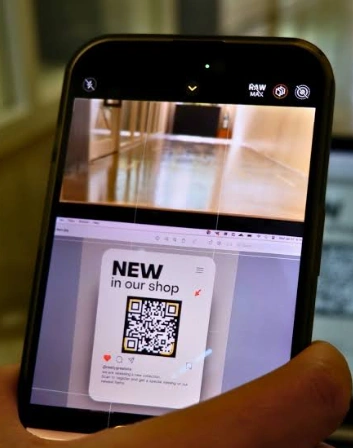
The Biggest Problems With QR Payments Nobody Talks About
The Biggest Problems With QR Payments Nobody Talks About | QR payments have transformed the way people pay for everyday purchases. Instead of carrying cash or using a physical card, customers can simply scan a code with their smartphone and complete a transaction within seconds.
The convenience is obvious. QR payments are fast, widely accessible, and relatively inexpensive for businesses to implement. They have become particularly popular in restaurants, retail stores, transportation, and small businesses.
However, the technology is not perfect.
Behind the convenience are several problems that consumers and businesses may not think about until something goes wrong. From scams and privacy concerns to connectivity problems and mistaken payments, QR payments have weaknesses that deserve more attention.
Understanding these risks can help users make smarter decisions when using QR-based payment systems.
1. QR Code Scams Can Be Difficult to Notice
One of the biggest problems with QR payments is that users may not always know where a QR code actually leads.
A malicious QR code can potentially redirect users to a fraudulent website, fake payment page, or other malicious destination.
This type of attack is sometimes referred to as quishing, a term combining QR codes and phishing.
The danger comes from the fact that scanning a QR code feels routine.
Users may see a code at a restaurant, parking area, vending machine, or public location and scan it without carefully checking whether it is legitimate.
A simple sticker placed over an original QR code can potentially redirect payments or information to an attacker.
2. Users Can Send Money to the Wrong Person
QR payments can make transactions incredibly fast, but speed can also increase the chance of mistakes.
A customer might accidentally:
- Scan the wrong code
- Select the wrong account
- Enter an incorrect amount
- Confirm a payment without checking the recipient
- Pay a duplicate invoice
With cash, you physically hand money to someone.
With QR payments, the transaction may happen with just a few taps.
That means users should always verify the recipient and amount before confirming.
3. Internet Connectivity Can Become a Problem
QR payment systems generally depend on digital infrastructure.
If your phone has no internet connection, the merchant’s connection is unavailable, or the payment network experiences an outage, a transaction may fail.
This can be especially inconvenient when:
- You have no cash available
- The store does not accept cards
- Mobile data is weak
- Wi-Fi is unavailable
- The payment provider is experiencing technical problems
Digital convenience works extremely well when the infrastructure works.
When it fails, however, users may suddenly have very few alternatives.
4. Your Smartphone Becomes Part of Your Wallet
Traditional wallets can be stolen, but QR payments introduce another important dependency: your smartphone.
Your phone may contain:
- Payment applications
- Banking applications
- Authentication tools
- Personal information
- Email accounts
- Phone numbers
- Stored credentials
If someone gains unauthorized access to the device or payment account, the consequences can be much greater than simply losing cash.
Strong screen locks, biometric authentication, updated software, and secure account credentials are therefore important.
5. Privacy Is Not Always Obvious
Cash transactions generally leave very little digital information.
Digital payments are different.
A QR transaction may generate records involving information such as:
- Transaction time
- Transaction amount
- Merchant
- Payment provider
- Account information
- Transaction location or related metadata
The exact information collected depends on the payment system and applicable policies.
The convenience of digital payments therefore comes with a trade-off: transactions can become more traceable than cash purchases.
Consumers should understand what information their payment provider collects and how that information is used or shared.
6. Fake Merchant QR Codes Can Redirect Payments
Another potential problem occurs when criminals replace or modify a merchant’s QR code.
Imagine a customer entering a café and seeing a QR code next to the cashier.
The customer assumes the code belongs to the business.
But if the code has been replaced, the payment could potentially go to someone else.
This is why businesses should protect payment codes and customers should verify the recipient displayed by their payment application before completing the transaction.
7. QR Payments Can Encourage Impulse Spending
Digital payments remove some of the psychological friction associated with spending money.
Paying with physical cash requires taking money out of a wallet and handing it over.
A QR payment may require only a few taps.
That convenience can make spending feel less tangible.
For frequent small purchases, users may underestimate how much they are spending over time.
A coffee, snack, ride, subscription, and online purchase may each seem insignificant individually.
Together, they can become a meaningful expense.
8. Refunds Can Be Complicated
A failed or incorrect payment does not always mean the money immediately returns to the customer.
Refund procedures depend on:
- The payment provider
- The merchant
- The bank
- The transaction type
- The reason for the refund
Some systems process refunds quickly.
Others may require customers to contact the merchant or payment provider.
This can be frustrating when the customer needs the money returned urgently.
Before using an unfamiliar payment system, it is worth understanding how disputes and refunds are handled.
9. Small Businesses Can Become Dependent on Payment Platforms
QR payments are useful for merchants because they can reduce the need for cash handling and make transactions easier.
However, businesses also become dependent on third-party infrastructure.
If a payment provider experiences:
- An outage
- Technical problems
- Account restrictions
- Settlement delays
- Policy changes
The merchant may have difficulty accepting payments.
For small businesses operating on narrow margins, even temporary payment disruptions can be inconvenient.
10. Not Everyone Has Equal Access
QR payments assume that customers have access to appropriate technology.
That may include:
- A smartphone
- Mobile data or Wi-Fi
- A supported payment application
- A bank or digital wallet account
- Basic digital literacy
People who lack these resources can be excluded from increasingly cashless environments.
Older adults, people without smartphones, and customers in areas with weak connectivity may find digital payment systems more difficult to use.
A payment ecosystem should ideally provide alternatives rather than assuming everyone has identical access to technology.
11. QR Codes Can Create a False Sense of Security
A QR code can look official.
It may have a business logo, professional design, or familiar branding.
But appearance alone does not prove authenticity.
Users should remember that a QR code is simply a mechanism for encoding information. The code itself does not guarantee that the destination or payment recipient is trustworthy.
Before confirming a transaction, check the information displayed by the payment application.
12. Social Engineering Remains a Major Risk
Technology does not eliminate human manipulation.
A scammer may contact someone and claim to be:
- A bank representative
- A delivery company
- A merchant
- A government organization
- A customer-support agent
They may then instruct the victim to scan a QR code or make a payment.
The QR code is not necessarily the primary problem.
The real attack is social engineering.
The attacker convinces the victim to perform an action voluntarily.
This is why users should be suspicious of unexpected requests involving payments, account verification, refunds, or urgent transactions.
How to Use QR Payments More Safely
QR payments can still be extremely useful.
The goal is not to avoid them completely but to use them carefully.
Check the Recipient
Before confirming a payment, verify that the displayed recipient matches the intended merchant or person.
Check the Amount
Make sure the amount is correct before pressing the final confirmation button.
Avoid Suspicious QR Codes
Be cautious with QR codes found on random posters, messages, emails, or unexpected websites.
Keep Your Phone Secure
Use a strong device lock and keep your operating system and payment applications updated.
Enable Transaction Notifications
Notifications can help you quickly identify unauthorized or unexpected payments.
Keep an Alternative Payment Method
When possible, carry a backup payment option for situations involving network or system failures.
QR Payments vs. Cash
Neither payment method is perfect.
| Factor | QR Payments | Cash |
|---|---|---|
| Convenience | Very high | Moderate |
| Transaction speed | Very fast | Fast |
| Internet dependency | Often yes | No |
| Digital record | Usually yes | Usually no |
| Scam risks | QR/phishing/social engineering | Theft/counterfeit |
| Refund process | Provider-dependent | Often direct |
| Smartphone required | Usually | No |
| Spending visibility | Easy to track digitally | Requires manual tracking |
The right choice depends on the situation.
For many everyday transactions, QR payments are extremely convenient.
For emergencies, privacy-sensitive purchases, or situations involving unreliable connectivity, cash can still have advantages.
What the Future of QR Payments Needs to Improve
As QR payments become more widespread, payment providers and merchants need to address more than convenience.
Important areas include:
- Better fraud detection
- Clearer transaction confirmation
- Stronger merchant authentication
- Faster dispute resolution
- Better privacy protections
- More reliable infrastructure
- Improved accessibility
- Consumer education
Security should be designed into the payment experience rather than treated as an afterthought.
QR payments have made everyday transactions faster and more convenient, but convenience does not mean risk-free.
Scams, incorrect payments, outages, privacy concerns, smartphone security, refund difficulties, and unequal access are some of the biggest issues users should understand.
The good news is that most risks can be reduced through basic precautions.
Check the recipient. Verify the amount. Be cautious with unfamiliar QR codes. Keep your device secure. Monitor your transactions and maintain a backup payment option when possible.
QR payments are likely to remain an important part of the digital economy.
The goal should not be to reject the technology, but to make sure that speed and convenience never come at the expense of security, privacy, or informed decision-making.
The History and Evolution of QR Codes
The History and Evolution of QR Codes | QR codes have become a familiar part of everyday life. They appear on product packaging, restaurant menus, advertisements, event tickets, payment systems, business cards, and even museum displays. With a simple scan using a smartphone, users can open a website, access information, make a payment, or perform other digital actions.
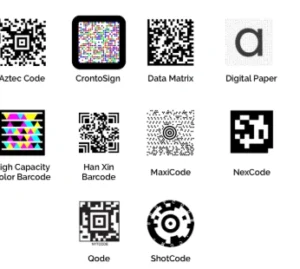
But QR codes were not originally designed for smartphones or marketing. Their history began in Japan in the 1990s, when engineers developed a faster way to track components during automobile manufacturing.
The story of QR codes is a fascinating example of how a technology created for a specific industrial problem eventually became a global digital tool.
What Is a QR Code?
QR stands for Quick Response. A QR code is a two-dimensional barcode that can store information in a pattern of black and white modules.
Unlike traditional one-dimensional barcodes, which generally store information horizontally, QR codes can store data both horizontally and vertically. This allows them to contain considerably more information within a relatively small area.
A QR code can contain information such as:
- Website addresses
- Text
- Contact information
- Wi-Fi credentials
- Product information
- Payment details
- Event information
- Digital tickets
The code is designed to be scanned and interpreted by a compatible device or application.
The Birth of QR Codes in Japan
The history of QR codes began in 1994, when DENSO WAVE developed the technology in Japan.
The project was led by engineer Masahiro Hara and his team. Their objective was practical: automobile manufacturing required a system capable of tracking many different components quickly and accurately.
Traditional barcodes had limitations because they could store only a relatively small amount of information. Workers sometimes needed to scan multiple barcodes to identify a single item.
The development team looked for a more efficient solution.
The result was the QR code.
DENSO WAVE’s official history states that the first QR code was developed in 1994 to improve the management of automotive parts during manufacturing.
Why Was the QR Code Different?
The biggest innovation was the QR code’s two-dimensional structure.
Traditional barcodes generally consist of a series of vertical lines. QR codes use a square pattern that allows information to be encoded in two dimensions.
This design provided several advantages.
Greater Data Capacity
QR codes could store significantly more information than conventional barcodes.
Faster Scanning
The code could be read quickly, making it suitable for industrial environments where speed mattered.
360-Degree Scanning
The distinctive square positioning patterns help scanners recognize the code’s orientation, allowing it to be scanned from different directions.
Error Correction
QR codes include error-correction capabilities, meaning a code can remain readable even when part of its surface is damaged or obscured.
These characteristics helped QR codes become more versatile than traditional barcodes.
QR Codes Were Initially Free to Use
One of the important decisions in QR code history was DENSO WAVE’s approach to intellectual property.
The company made the QR code specification available for use without requiring licensing fees, although it retained certain rights and trademarks.
This openness helped encourage adoption across different industries.
Instead of remaining a proprietary technology used only by one manufacturer, QR codes could be incorporated into a wide variety of products and systems.
That decision became an important factor in the technology’s eventual global expansion.
From Factories to Everyday Life
For years, QR codes were primarily associated with industrial applications in Japan.
Their use gradually expanded into logistics, inventory management, manufacturing, retail, and other commercial environments.
However, QR codes did not immediately become a global consumer phenomenon.
One major limitation was the need for suitable scanning hardware or software.
As mobile phones became more advanced, this began to change.
The Smartphone Revolution
The rise of smartphones transformed the potential of QR codes.
Modern smartphones included cameras capable of capturing QR codes, while software could interpret the encoded information.
This created a simple interaction:
Point the camera → Scan the code → Access digital information
Users no longer needed specialized industrial scanners.
This dramatically expanded the possible applications of QR technology.
Companies could place QR codes on posters, packaging, brochures, receipts, menus, and advertisements and connect physical objects to digital content.
QR Codes and Marketing
Marketers quickly recognized the potential of QR codes as a bridge between offline and online experiences.
A printed advertisement could contain a QR code that directed customers to a website.
A product package could link to instructions or additional information.
A restaurant menu could connect customers to a digital ordering system.
A business card could contain contact information that customers could save directly to their phones.
The technology effectively turned a static physical surface into an interactive gateway.
The Rise of QR Code Payments
One of the most significant developments in QR code technology has been its use in digital payments.
Instead of entering account details manually, customers can scan a QR code to initiate a payment transaction.
This approach became particularly influential in markets where mobile payments expanded rapidly.
QR-based payment systems can be used by large businesses, small retailers, restaurants, street vendors, and service providers.
The simplicity of displaying a code makes the technology accessible even to businesses that may not have sophisticated payment infrastructure.
QR Codes During the COVID-19 Pandemic
QR codes experienced another major increase in visibility during the COVID-19 pandemic.
Businesses and public institutions used QR codes for a variety of contactless interactions, including:
- Digital menus
- Check-in systems
- Health-related information
- Contactless payments
- Registration forms
- Digital certificates
- Information pages
The pandemic accelerated consumer familiarity with scanning QR codes.
People who had previously viewed QR codes as an occasional marketing tool began using them as part of everyday transactions and services.
QR Codes in Modern Retail
Today, QR codes can be found throughout the retail environment.
They can connect physical products to digital information such as:
- Product specifications
- User manuals
- Authentication pages
- Promotions
- Loyalty programs
- Reviews
- Videos
- Customer support
This creates a more flexible shopping experience.
Instead of printing every piece of information directly on packaging, businesses can use QR codes to provide customers with additional digital resources.
QR Codes in Events and Travel
QR technology has also changed how people access events and travel services.
Digital tickets can contain QR codes that are scanned at entrances. Airlines, transportation companies, entertainment venues, and conference organizers can use similar systems to verify access.
The benefit is convenience.
Instead of printing a physical ticket, a customer can keep the QR code on a smartphone.
This reduces paper use while making ticket verification fast and easy.
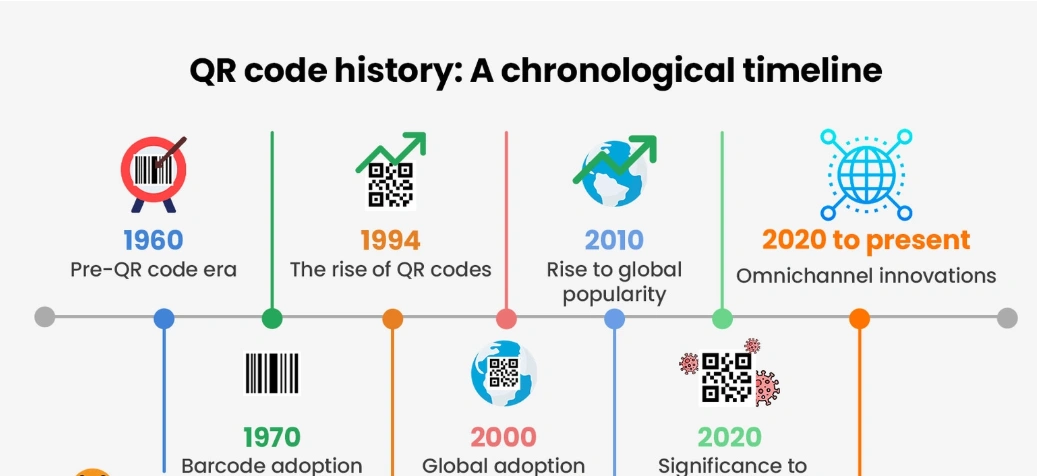
How QR Codes Have Evolved
The basic visual concept of the QR code has remained remarkably consistent, but its applications have changed dramatically.
Its evolution can be viewed in several stages:
1994: Developed for tracking automotive components.
Late 1990s–2000s: Expanded into logistics, manufacturing, and commercial applications.
2000s: Mobile phones increasingly gained QR scanning capabilities.
2010s: QR codes became more common in marketing, retail, and mobile services.
2020–2021: Contactless applications during the pandemic accelerated widespread consumer adoption.
Today: QR codes are used for payments, authentication, information sharing, ticketing, marketing, connectivity, and many other digital interactions.
The technology evolved not because the fundamental code changed dramatically, but because the surrounding digital ecosystem became capable of using it more effectively.
Why QR Codes Remain Relevant
Despite being more than three decades old, QR codes remain highly useful.
One reason is their simplicity.
Users do not need to type a long website address or manually enter complicated information. A scan can perform the connection almost instantly.
QR codes also work across many physical environments. They can be printed on paper, displayed on screens, attached to products, or incorporated into signs.
Their low cost and flexibility make them attractive to businesses and organizations of different sizes.
The Future of QR Codes
The future of QR codes is likely to involve deeper integration with digital services.
They may continue to play an important role in:
- Digital payments
- Product authentication
- Smart packaging
- Customer engagement
- Identity and access systems
- Connected devices
- Retail experiences
- Digital tickets
QR codes may also become less noticeable as they become integrated into broader technologies.
The important point is that QR codes provide a simple bridge between the physical and digital worlds.
The history and evolution of QR codes demonstrates how a technology can move far beyond its original purpose.
Created in Japan in 1994 to solve an automotive manufacturing problem, QR codes eventually became a global method for connecting physical objects with digital information. Their success was driven by high data capacity, fast scanning, error correction, open availability, and—most importantly—the growth of smartphones.
Today, QR codes are no longer limited to factories or specialized scanners. They are part of everyday experiences, from restaurant menus and payments to event tickets and product information.
What began as a solution for tracking automobile parts has become one of the world’s most recognizable tools for connecting the physical and digital worlds.
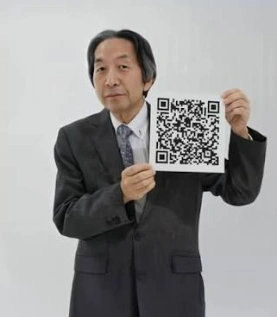
Masahiro Hara and the Birth of QR Codes
Masahiro Hara and the Birth of QR Codes: The Innovation That Changed Digital Communication
Masahiro Hara and the Birth of QR Codes | In today’s digital world, QR codes are everywhere. They appear on restaurant menus, product packaging, event tickets, payment systems, advertisements, and even business cards. With a simple smartphone scan, users can instantly access websites, make payments, download apps, or retrieve important information. While billions of people use QR codes every day, few know the story behind their invention.
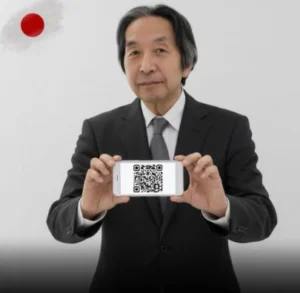
The creator of this revolutionary technology is Masahiro Hara, a Japanese engineer whose innovative thinking transformed the way information is stored and shared. His invention, the Quick Response (QR) Code, has become one of the most influential technologies of the digital age.
Who Is Masahiro Hara?
Masahiro Hara is a Japanese engineer best known as the inventor of the QR Code. During the early 1990s, he worked for Denso Wave, a subsidiary of the Toyota Group specializing in automatic identification and data capture technologies.
At the time, the automotive industry relied heavily on traditional barcodes to track components throughout manufacturing. However, barcodes had significant limitations. They stored only a small amount of information and required precise alignment during scanning, making the process slower and less efficient.
Recognizing these challenges, Hara sought to create a faster, more powerful solution that could improve industrial operations.
The Problem with Traditional Barcodes
Before QR codes existed, one-dimensional barcodes were the industry standard. Although useful, they suffered from several disadvantages:
- Limited data storage capacity.
- Slow scanning speed.
- Difficulty reading damaged labels.
- Need for precise scanner positioning.
- Inefficient handling of complex manufacturing processes.
As Toyota’s production lines became increasingly sophisticated, these limitations created bottlenecks that affected efficiency.
Masahiro Hara believed there had to be a better way.
The Birth of the QR Code
In 1994, after extensive research and experimentation, Masahiro Hara and his development team introduced the Quick Response Code, better known as the QR Code.
Unlike traditional barcodes, QR codes store information in two dimensions—both horizontally and vertically. This innovation dramatically increased the amount of data that could be encoded within a small square.
One of the most distinctive features of QR codes is the three large squares positioned in the corners. These finder patterns allow scanners to instantly detect the code’s orientation, enabling rapid and accurate scanning from virtually any angle.
The result was a revolutionary system that could be scanned significantly faster than conventional barcodes.
Why Is It Called a “Quick Response” Code?
The name “Quick Response” reflects the technology’s primary advantage: speed.
Hara designed the code so scanners could identify and decode information almost instantly, reducing delays on production lines. The faster response time greatly improved inventory management and manufacturing efficiency.
This speed later became one of the reasons QR codes gained widespread adoption across numerous industries.
Revolutionary Features of QR Codes
The QR Code introduced several innovations that set it apart from traditional barcode technology.
1. Massive Data Capacity
A QR code can store thousands of characters, far exceeding the capacity of conventional barcodes.
2. Fast Scanning
Scanners can recognize QR codes almost instantly from multiple directions.
3. Error Correction
Built-in error correction technology allows QR codes to remain readable even if up to 30% of the code is damaged or obscured.
4. Compact Design
Large amounts of information fit within a relatively small printed area.
5. Multiple Data Types
QR codes can contain:
- URLs
- Contact information
- Text
- Wi-Fi credentials
- Payment details
- GPS locations
- Product information
- Event tickets
Open Technology That Changed the World
One of the most remarkable decisions made by Denso Wave was not aggressively enforcing patent licensing for QR code usage.
Although the company patented the technology, it allowed businesses and developers to use QR codes freely.
This open approach accelerated global adoption and encouraged innovation across industries, helping QR codes become an international standard.
QR Codes Beyond Manufacturing
Although originally developed for automotive manufacturing, QR codes soon expanded into countless industries.
Today they are commonly used in:
- Digital payments
- Mobile banking
- Marketing campaigns
- Retail inventory systems
- Healthcare
- Transportation
- Education
- Tourism
- Restaurant menus
- Event management
- Product authentication
The COVID-19 pandemic further accelerated QR code adoption as businesses sought contactless solutions for menus, payments, and customer interactions.
The Global Impact of Masahiro Hara’s Invention
Masahiro Hara’s invention has fundamentally transformed how people interact with information.
Today, billions of QR code scans occur every month around the world. Smartphones have eliminated the need for dedicated scanners, allowing virtually anyone to access digital content within seconds.
From paying for coffee to checking into flights, QR codes have become an invisible yet essential part of everyday life.
Awards and Recognition
Although Masahiro Hara is not widely known outside engineering circles, his work has earned significant recognition.
His invention has received numerous technology awards and has been praised for its simplicity, efficiency, and lasting global impact.
Many experts consider the QR Code one of the most influential identification technologies since the invention of the barcode.
Legacy of Innovation
Masahiro Hara demonstrated that solving a practical industrial problem can lead to innovations with worldwide significance.
What began as a tool for tracking automotive components has evolved into a universal gateway connecting the physical and digital worlds.
As digital transformation continues, QR codes remain an essential technology powering smart cities, cashless payments, authentication systems, and the Internet of Things (IoT).
The story of Masahiro Hara and the Birth of QR Codes is a remarkable example of how innovative engineering can reshape everyday life. By addressing the shortcomings of traditional barcodes, Hara created a technology that now supports commerce, communication, healthcare, transportation, and countless other industries worldwide.
More than three decades after its invention, the QR Code continues to evolve, proving that one simple idea can have an extraordinary global impact. Every time someone scans a QR code, they are using a technology born from Masahiro Hara’s vision of making information faster, smarter, and more accessible.